
Introduction
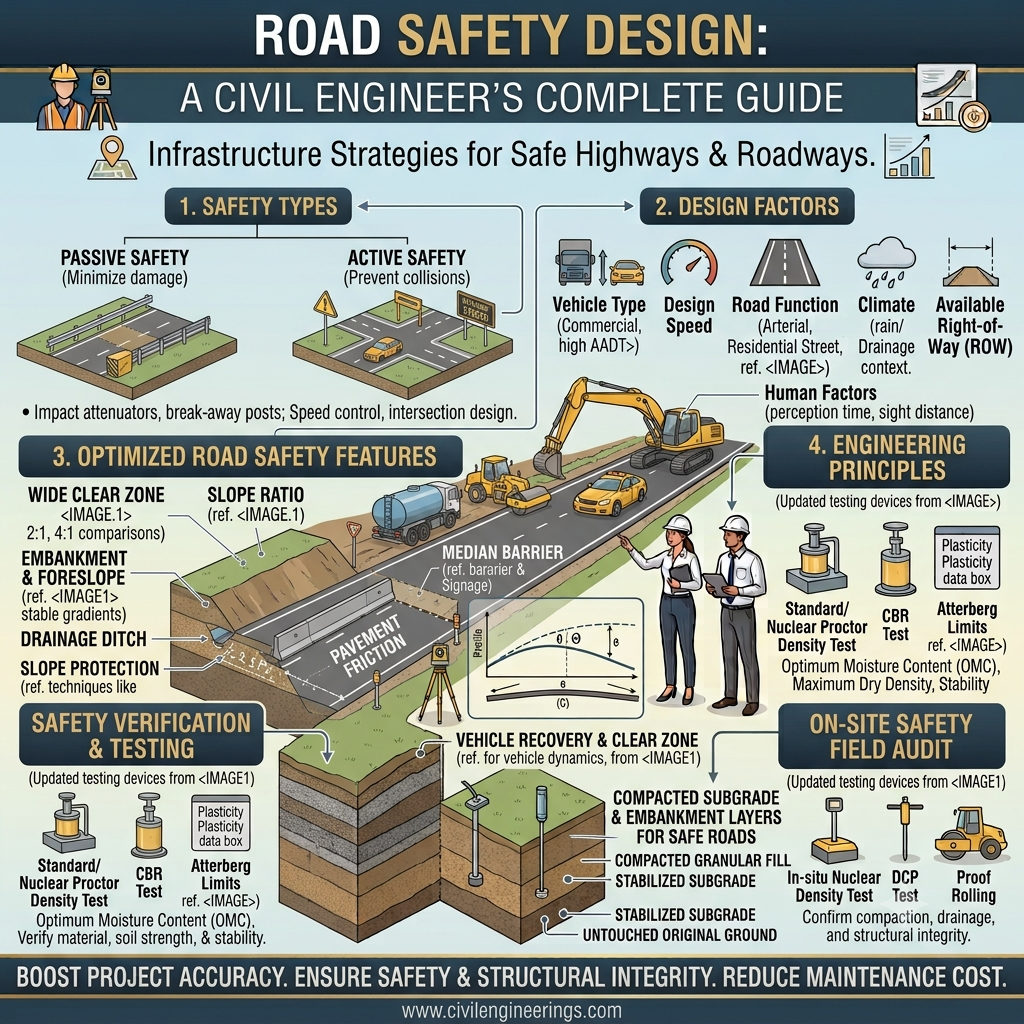
Every road should protect lives before it carries traffic. That simple principle forms the foundation of Road Safety Design. A well-designed road reduces crashes, minimizes injuries, improves traffic flow, and creates a comfortable travel experience for drivers, cyclists, and pedestrians. Modern highway engineering focuses on eliminating hazards through intelligent planning rather than relying only on traffic enforcement.
Road Safety Design combines civil engineering, transportation engineering, traffic engineering, and human behavior to create forgiving roads. Engineers evaluate vehicle movement, road geometry, roadside conditions, visibility, drainage, and traffic control devices before construction begins. Every design decision influences the safety of thousands of road users for many years.
Governments around the world invest heavily in safer transportation infrastructure because road crashes cause significant economic losses and human suffering. Engineers who understand Road Safety Design can develop highways that reduce accident risks while supporting sustainable transportation and economic growth.
This guide explains the principles, objectives, engineering concepts, practical applications, and best practices of Road Safety Design for engineers, contractors, students, and infrastructure professionals.
What is Road Safety Design?
Road Safety Design is the process of planning, designing, and constructing roads that reduce the likelihood and severity of traffic crashes. It integrates engineering principles with human behavior, vehicle characteristics, and environmental conditions to create a safer transportation network.
Road safety does not depend on one feature alone. Instead, it results from the careful integration of roadway geometry, pavement quality, traffic control devices, drainage systems, roadside protection, lighting, and pedestrian facilities.
A successful design encourages predictable driver behavior while reducing the consequences of human error.
Primary Goals
- Reduce traffic collisions.
- Minimize fatal and serious injuries.
- Improve driver comfort.
- Protect vulnerable road users.
- Support efficient traffic movement.
- Increase roadway service life.
Why Road Safety Design Matters
Road transportation connects cities, industries, schools, hospitals, and communities. Poor road design increases crash risks, delays emergency response, and raises maintenance costs. Effective Road Safety Design addresses these challenges before construction begins.
Key Benefits
- Improves public safety.
- Reduces accident rates.
- Supports smooth traffic flow.
- Lowers vehicle operating costs.
- Enhances driver confidence.
- Protects pedestrians and cyclists.
- Extends pavement performance.
- Reduces long-term maintenance expenses.
Practical Example
Consider a four-leg intersection without proper turning lanes or traffic signs. Drivers may struggle to judge gaps, leading to rear-end and side-impact collisions. Engineers can improve safety by introducing channelized turning lanes, better sight distance, reflective pavement markings, and appropriate traffic signals.
Objectives of Road Safety Design
Every road project should achieve clearly defined safety objectives.
Improve Driver Safety
Designers create predictable road layouts that help drivers make quick and accurate decisions.
Protect Vulnerable Road Users
Pedestrians, cyclists, children and motorcyclists require dedicated facilities and safer crossing points.
Reduce Crash Severity
Guardrails, crash barriers, clear recovery zones, and energy-absorbing devices reduce injury severity during collisions.
Enhance Traffic Efficiency
A safe road also supports efficient movement by minimizing unnecessary delays and conflicts.
Increase Infrastructure Sustainability
Durable pavements, proper drainage, and quality materials reduce maintenance needs while preserving road safety.
Engineering Principles of Road Safety Design
1. Human Factors
Road users make mistakes. Engineers should design roads that accommodate those mistakes without causing severe consequences.
Important considerations include:
- Driver reaction time
- Decision-making ability
- Night visibility
- Age-related limitations
- Fatigue
- Weather conditions
Designers should avoid sudden changes in alignment, confusing signs, or unexpected hazards.
2. Safe Road Geometry
Geometric design directly affects traffic safety.
Key geometric elements include:
- Horizontal curves
- Vertical curves
- Road gradients
- Lane width
- Shoulder width
- Cross slope
- Superelevation
Proper geometry allows drivers to maintain safe speeds while improving vehicle stability.
3. Forgiving Roadsides
A forgiving roadside minimizes injury when a vehicle leaves the travel lane.
Engineers improve roadside safety by providing:
- Clear recovery zones
- Guardrails
- Crash cushions
- Safety barriers
- Breakaway sign supports
- Proper embankment slopes
Removing fixed obstacles near the roadway significantly reduces crash severity.
4. Speed Management
Vehicle speed strongly influences both crash frequency and crash severity.
Road designers control speed through:
- Lane width
- Horizontal curvature
- Roundabouts
- Traffic calming measures
- Gateway treatments
- Speed feedback signs
The selected design speed should match the expected operating speed.
5. Visibility and Sight Distance
Drivers require sufficient visibility to identify hazards, react safely, and stop when necessary.
Engineers evaluate:
- Stopping sight distance
- Overtaking sight distance
- Decision sight distance
- Intersection sight triangles
Vegetation, roadside structures, and utility poles should never obstruct critical sight lines.
6. Road Drainage
Water reduces pavement friction and increases hydroplaning risks.
Effective drainage systems include:
- Side drains
- Kerb channels
- Culverts
- Cross drains
- Median drains
Proper drainage preserves pavement strength while improving driving safety during rainfall.
Key Components of Road Safety Design
Road Alignment
Good alignment provides consistency throughout the roadway.
Engineers should avoid:
- Sharp curves
- Hidden dips
- Sudden gradient changes
- Unexpected lane shifts
Smooth alignment improves driver comfort and reduces collision risks.
Cross Section Design
A properly designed cross section includes:
- Traffic lanes
- Shoulders
- Medians
- Side slopes
- Drainage facilities
Adequate lane width and shoulder space allow drivers to recover safely during emergencies.
Safe Intersections
Intersections experience a high percentage of roadway crashes.
Engineers improve intersection safety by using:
- Roundabouts
- Signalized intersections
- Channelized turning lanes
- Refuge islands
- Proper lighting
- Clear road markings
Reducing conflict points significantly enhances safety.
Roadside Safety Features
Roadside elements should protect drivers rather than create additional hazards.
Examples include:
- Steel guardrails
- Concrete barriers
- Crash cushions
- Reflective delineators
- Safety fencing
These features help redirect errant vehicles and reduce impact severity.
Traffic Control Devices
Traffic control devices communicate important information to road users.
Common devices include:
- Regulatory signs
- Warning signs
- Guide signs
- Pavement markings
- Traffic signals
- Reflective road studs
Consistent placement and high visibility improve compliance and reduce confusion.
Pedestrian and Bicycle Facilities
Modern Road Safety Design accommodates all road users.
Important facilities include:
- Sidewalks
- Cycle tracks
- Zebra crossings
- Pedestrian bridges
- Refuge islands
- Accessible ramps
Dedicated facilities encourage safer and more sustainable transportation.
Engineering Diagrams
1: Safe Road Cross Section
               ROAD SAFETY CROSS SECTION

 Shoulder | Lane | Median | Lane | Shoulder
----------|------|--------|------|----------
 Drain     Pavement      Pavement     Drain
2: Safe Sight Distance Concept
Driver
   🚗
    \
     \________________________ Hazard
      \_______________________👷

Adequate Sight Distance = Safe Reaction + Safe Stopping
3: Forgiving Roadside
 Travel Lane
=============================
        Shoulder
-----------------------------
 Clear Recovery Zone
-----------------------------
 Guardrail
=============================
 Safe Embankment
Diagram 4: Safe Intersection Layout
          ↑
          │
     ←────┼────→
          │
          ↓

✔ Turning Lane
✔ Traffic Signal
✔ Pedestrian Crossing
✔ Stop Line
✔ Road Markings
Best Practices for Effective Road Safety Design
- Design roads based on expected traffic demand.
- Maintain consistent geometric alignment.
- Provide adequate sight distance throughout the route.
- Install clear and durable road markings.
- Use high-quality reflective traffic signs.
- Design efficient surface and subsurface drainage systems.
- Remove hazardous roadside obstacles wherever possible.
- Include pedestrian and cyclist facilities in urban projects.
- Conduct independent road safety audits before opening the road.
- Inspect and maintain safety features regularly to preserve their effectiveness.
Key Takeaways
Road Safety Design begins long before pavement construction starts. Every engineering decision—from route alignment and lane width to drainage, roadside protection, and traffic control devices—affects the safety of road users. By applying sound geometric design principles, accommodating human behavior, and integrating modern safety features, engineers create transportation infrastructure that reduces crash risks and supports efficient mobility. These principles form the foundation for safer highways, urban roads, and rural transportation networks.
Practical Applications of Road Safety Design
Road Safety Design applies to every category of roadway, from village roads to multi-lane expressways. Engineers adapt safety measures according to traffic volume, vehicle speed, surrounding land use, and road function.
1. Urban Roads
Urban roads experience heavy traffic, pedestrian movement, and frequent intersections. Safety measures should focus on reducing conflicts between vehicles and vulnerable road users.
Common design features include:
- Signalized intersections
- Raised pedestrian crossings
- Dedicated bicycle lanes
- Street lighting
- Traffic calming measures
- Bus bays
- Refuge islands
Example: A commercial street with high pedestrian activity can become significantly safer by adding zebra crossings, median refuges, speed tables, and pedestrian signals.
2. Rural Highways
Rural highways generally carry higher-speed traffic over long distances. Engineers should prioritize visibility, forgiving roadsides, and consistent alignment.
Recommended safety features include:
- Wide paved shoulders
- Guardrails near embankments
- Chevron signs on curves
- Rumble strips
- Reflective pavement markers
- Clear roadside recovery zones
3. Mountain Roads
Mountain highways require additional safety measures because of steep gradients, sharp curves, and unstable slopes.
Important design considerations include:
- Retaining walls
- Rockfall protection systems
- Safety barriers
- Escape ramps for heavy vehicles
- Adequate drainage
- Convex mirrors at blind curves
4. Expressways and Motorways
High-speed corridors demand access control and consistent geometric standards.
Typical features include:
- Grade-separated interchanges
- Median barriers
- Emergency shoulders
- Intelligent Transportation Systems (ITS)
- Variable message signs
- High-performance crash barriers
Road Safety Audit
A Road Safety Audit (RSA) is an independent and systematic review of a road project to identify potential safety issues before they contribute to crashes.
Unlike routine inspections, an RSA focuses exclusively on improving safety for all road users.
Stages of a Road Safety Audit
- Planning stage
- Preliminary design
- Detailed design
- Construction stage
- Pre-opening inspection
- Existing road assessment
Benefits
- Identifies hazards early.
- Reduces long-term maintenance costs.
- Improves project quality.
- Enhances public confidence.
- Minimizes future accident risks.
Common Road Safety Design Mistakes
Many road crashes result from avoidable design deficiencies rather than driver behavior alone.
Common mistakes include:
- Inadequate stopping sight distance.
- Sharp curves without proper superelevation.
- Poor drainage causing water accumulation.
- Insufficient shoulder width.
- Missing or unclear traffic signs.
- Inconsistent lane widths.
- Improper pavement markings.
- Fixed roadside obstacles close to the carriageway.
- Poor lighting at intersections.
- Lack of pedestrian crossing facilities.
Engineers should identify and correct these issues during the planning and design stages.
Practical Recommendations for:
Civil Engineers
- Design roads based on projected traffic demand instead of current traffic alone.
- Verify survey and geotechnical data before finalizing alignment.
- Conduct Road Safety Audits during each project phase.
- Design forgiving roadsides wherever site conditions permit.
- Integrate drainage and safety features into the initial design rather than adding them later.
- Use reliable crash data to improve future projects.
Contractors
- Follow approved drawings and specifications precisely.
- Install road signs and pavement markings according to project standards.
- Protect workers and motorists through effective temporary traffic management.
- Inspect safety barriers and guardrails before project completion.
- Replace damaged safety devices immediately.
Engineering Students
- Learn the relationship between geometric design and traffic safety.
- Study real-world accident case studies.
- Understand Road Safety Audit procedures.
- Visit active highway construction projects.
- Develop skills in traffic engineering software and highway design standards.
Future Trends in Road Safety Design
Road engineering continues to evolve with new technologies that improve safety and operational efficiency.
Emerging trends include:
Intelligent Transportation Systems (ITS)
Real-time monitoring, adaptive traffic signals, and connected infrastructure improve traffic management and reduce crash risks.
Smart Road Markings
Reflective and illuminated pavement markings enhance visibility during nighttime and adverse weather conditions.
Artificial Intelligence
AI analyzes traffic patterns and crash data to identify hazardous locations and recommend design improvements.
Autonomous Vehicle Infrastructure
Future roads will require highly visible lane markings, digital mapping, roadside sensors, and connected communication systems to support self-driving vehicles.
Sustainable Safety Design
Modern projects integrate green infrastructure, energy-efficient lighting, recycled materials, and environmentally friendly drainage systems while maintaining high safety standards.
General Discussion on IRC, AASHTO, and ICE Practices
International road engineering organizations provide valuable guidance for designing safer transportation infrastructure.
IRC (Indian Roads Congress)
IRC publications emphasize:
- Safe geometric design
- Proper sight distance
- High-quality pavement markings
- Road safety audits
- Pedestrian facilities
- Roadside safety improvements
AASHTO (American Association of State Highway and Transportation Officials)
AASHTO guidance focuses on:
- Design consistency
- Appropriate design speed
- Horizontal and vertical alignment
- Clear zones
- Intersection safety
- Human factors in highway design
ICE (Institution of Civil Engineers)
ICE promotes:
- Sustainable infrastructure
- Risk-based engineering
- Asset management
- Whole-life performance
- Continuous professional development
- Safe construction practices
Although project requirements differ by country, these organizations share a common objective: creating roads that provide safe, efficient, and durable transportation for all users.
Best Practices for Successful Road Safety Design
- Apply a “Safe System” approach from the planning stage.
- Design roads that accommodate human error.
- Maintain consistency in road geometry.
- Provide adequate stopping and decision sight distances.
- Install high-quality traffic signs and pavement markings.
- Separate pedestrians, cyclists, and vehicles where practical.
- Conduct Road Safety Audits before opening new roads.
- Maintain drainage systems regularly.
- Inspect roadside safety devices periodically.
- Use crash data to improve future road designs.
Frequently Asked Questions (FAQs)
1. What is Road Safety Design?
Road Safety Design is the process of planning and designing roads that reduce crash risks and protect all road users through safe geometry, traffic control devices, roadside protection, and engineering best practices.
2. Why is Road Safety Design important?
It improves traffic safety, reduces accident severity, protects vulnerable road users, lowers maintenance costs, and supports efficient transportation systems.
3. What are the main principles of Road Safety Design?
The main principles include safe road geometry, adequate sight distance, forgiving roadsides, effective drainage, speed management, and consideration of human factors.
4. What is a Road Safety Audit?
A Road Safety Audit is an independent engineering review that identifies potential safety problems during planning, design, construction, or operation so corrective measures can be implemented.
5. How does drainage improve road safety?
Proper drainage removes surface water, reduces hydroplaning risks, preserves pavement strength, and improves vehicle traction during rainfall.
6. What are forgiving roadsides?
Forgiving roadsides provide clear recovery areas, guardrails, crash cushions, and breakaway supports that reduce injury severity when vehicles leave the roadway.
7. Which road users benefit from Road Safety Design?
Drivers, passengers, pedestrians, cyclists, motorcyclists, public transport users, emergency vehicles, and freight operators all benefit from safer road infrastructure.
8. Which international organizations provide guidance for Road Safety Design?
Organizations such as IRC, AASHTO, and ICE publish widely accepted recommendations that support safer and more reliable road engineering practices.
9. What role does technology play in Road Safety Design?
Technologies such as Intelligent Transportation Systems (ITS), AI-based traffic analysis, smart road markings, and connected infrastructure improve traffic management and reduce crash risks.
10. How can engineers improve road safety throughout a project’s life?
Engineers should perform thorough planning, follow recognized design standards, conduct Road Safety Audits, maintain infrastructure regularly, and analyze crash data to guide continuous improvements.
Conclusion
Road Safety Design forms the backbone of modern transportation engineering because every design decision influences the safety of thousands of road users. Effective road safety begins with careful planning, continues through geometric design, drainage, roadside protection, traffic control devices, and extends into construction, maintenance, and regular safety audits. Engineers who apply sound engineering principles create roads that reduce crash frequency, minimize injury severity, and support efficient traffic movement.
Contractors strengthen these efforts by maintaining construction quality and installing safety features correctly. Students who understand these concepts develop a strong foundation for future highway engineering careers. By following recognized engineering practices, learning from crash data, and embracing emerging technologies, transportation professionals can build safer, smarter, and more sustainable infrastructure. Investing in Road Safety Design not only protects lives but also improves mobility, supports economic development, and delivers long-term value for communities and future generations.

Kamran Malik is a passionate civil engineering writer and researcher who specializes in construction, transportation, structural engineering, and infrastructure topics. Through his articles on CivilEngineerings.com, he simplifies complex engineering concepts and shares practical insights, industry trends, and educational resources for students, professionals, and engineering enthusiasts.