Introduction
Selecting the right project delivery method is one of the most important decisions in any construction project. Whether the project involves a residential building, commercial complex, highway, bridge, airport, or industrial facility, the chosen delivery system directly affects cost, schedule, quality, risk allocation, and communication among stakeholders.
The debate surrounding Design-Build vs Traditional Construction has become increasingly relevant as governments and private organizations seek faster, more efficient, and cost-effective ways to deliver infrastructure projects. While the traditional Design-Bid-Build approach has been the industry standard for decades, the Design-Build model has gained widespread popularity because it integrates design and construction under a single contract.
Each method offers distinct advantages and challenges. Understanding how they differ helps project owners, civil engineers, contractors, consultants, and engineering students choose the most suitable approach based on project complexity, budget, timeline, and risk tolerance.
This guide explains the differences between Design-Build vs Traditional Construction, compares their workflows, highlights engineering principles, and provides practical insights based on industry best practices.
What Is Design-Build Construction?
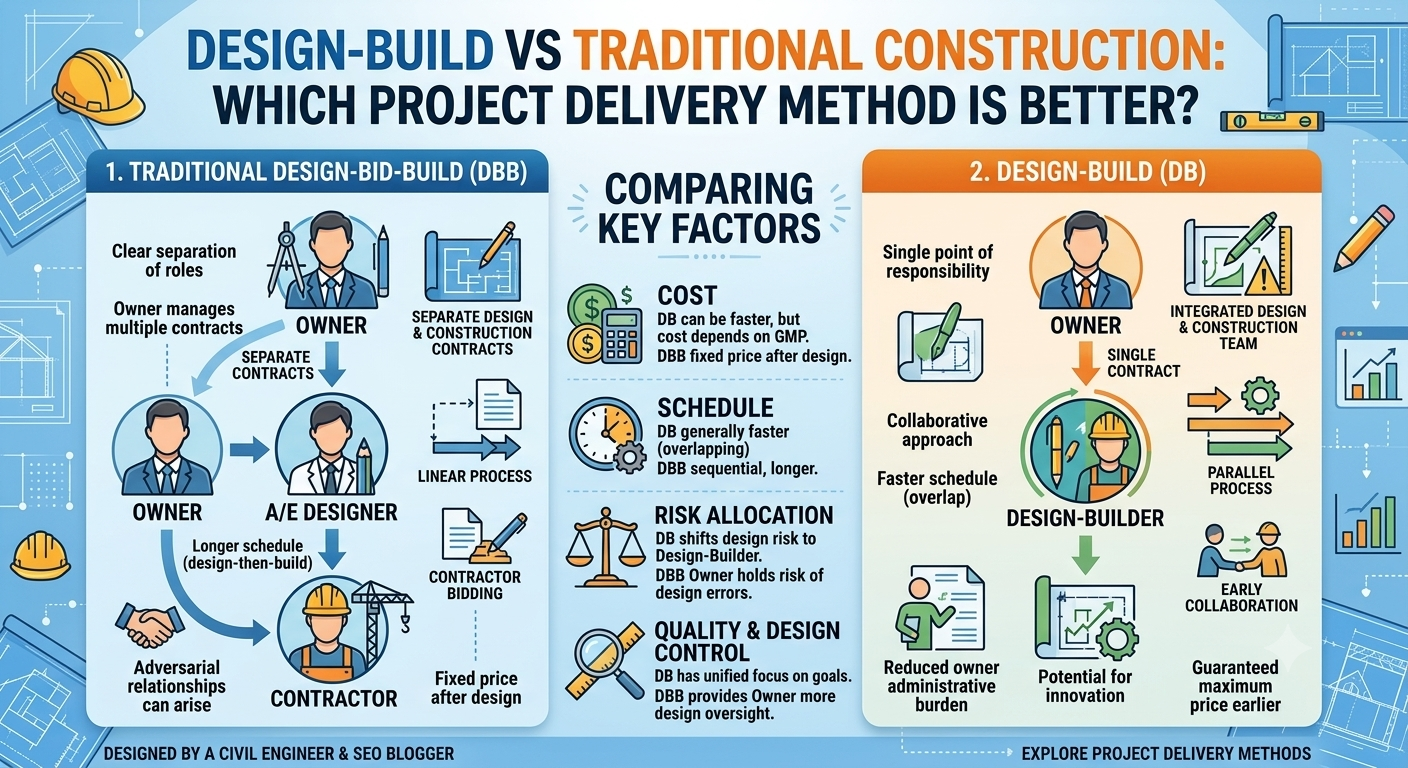
Design-Build is a project delivery method in which one organization is responsible for both the design and construction of a project under a single contract. Instead of hiring separate design consultants and construction contractors, the project owner appoints a single Design-Build team that manages the project from concept to completion.
This integrated approach encourages collaboration between architects, engineers, contractors, and project managers from the earliest stages of development. Because all key participants work together under one contractual framework, decisions are typically made more quickly, reducing delays and minimizing conflicts.
Key Characteristics of Design-Build
- Single point of responsibility
- Unified project management
- Integrated design and construction teams
- Faster project delivery
- Early contractor involvement
- Improved collaboration
- Streamlined communication
- Reduced contractual disputes
How the Design-Build Process Works
The Design-Build process generally follows these stages:
- Project requirements are defined by the owner.
- A Design-Build contractor or consortium is selected.
- Preliminary design begins while planning continues.
- Construction activities may start before the final design is fully completed.
- Design revisions and construction progress occur simultaneously.
- Testing, commissioning, and project handover are completed.
Practical Example
A transportation agency plans to construct a new six-lane expressway. Instead of separately hiring a design consultant and a construction contractor, it awards a single contract to a Design-Build consortium. The design engineers, geotechnical specialists, and construction managers work together from the outset, allowing bridge foundations, earthworks, and drainage systems to be planned concurrently. This integrated workflow can significantly reduce the overall project schedule.
What Is Traditional Construction (Design-Bid-Build)?
Traditional Construction, commonly known as Design-Bid-Build (DBB), is the most established project delivery method in the construction industry. Under this approach, the owner signs separate contracts for design and construction.
The project is designed completely before contractors are invited to submit bids. Construction begins only after the design has been finalized, approved, and awarded through the bidding process.
Because each phase is completed sequentially, the owner has greater control over design decisions before construction starts. However, this separation may also lead to longer project durations and coordination challenges.
Key Characteristics of Traditional Construction
- Separate contracts for design and construction
- Sequential project phases
- Competitive contractor bidding
- Detailed design completed before construction
- Independent supervision
- Greater owner involvement
- Clearly defined project scope
How the Traditional Construction Process Works
The typical Design-Bid-Build process includes:
- Project planning and feasibility studies.
- Appointment of design consultants.
- Preparation of detailed engineering drawings.
- Development of technical specifications.
- Tendering and competitive bidding.
- Contractor selection.
- Construction.
- Final inspection and project completion.
Practical Example
A municipality intends to build a new bridge across a river. Consulting engineers first prepare structural drawings, hydraulic analyses, and construction specifications. After the design is finalized, contractors submit bids. The lowest responsive and technically qualified bidder receives the construction contract and executes the work according to the approved design.
How the Two Project Delivery Methods Differ
Although both methods aim to deliver high-quality infrastructure, their workflows differ significantly.
Design-Build Workflow
Project Requirements
        │
        ▼
Design-Builder Selected
        │
        ▼
Design + Construction (Parallel)
        │
        ▼
Testing
        │
        ▼
Project Completion
Traditional Construction Workflow
Planning
      │
      ▼
Complete Design
      │
      ▼
Tendering
      │
      ▼
Contract Award
      │
      ▼
Construction
      │
      ▼
Completion
The most notable distinction is that Design-Build allows overlapping design and construction activities, while Traditional Construction follows a strictly sequential process.
Design-Build vs Traditional Construction: Side-by-Side Comparison
| Feature | Design-Build | Traditional Construction (Design-Bid-Build) |
|---|---|---|
| Contracts | Single contract | Separate design and construction contracts |
| Responsibility | One integrated team | Separate designer and contractor |
| Project Duration | Typically shorter | Generally longer |
| Communication | Centralized | Multiple communication channels |
| Design Flexibility | Collaborative and adaptive | Fixed before construction |
| Construction Start | May begin before final design | Begins after complete design approval |
| Risk Allocation | Shared within one entity | Divided among multiple parties |
| Change Management | Usually simpler | Often more complex |
| Owner Involvement | Moderate | High |
| Suitable Projects | Fast-track and complex projects | Projects with clearly defined requirements |
Engineering Perspective on Project Delivery
From an engineering standpoint, neither delivery method is universally superior. The most appropriate choice depends on the project’s objectives, technical complexity, budget constraints, risk profile, and schedule.
For example:
- Projects with aggressive completion deadlines often benefit from Design-Build because design and construction activities overlap.
- Projects requiring extensive owner review, detailed regulatory approvals, or highly specialized designs may be better suited to the Traditional approach.
Engineers should evaluate factors such as constructability, lifecycle performance, quality assurance, and stakeholder coordination before recommending a project delivery method.
Advantages of Design-Build
Faster Project Completion
Because design and construction proceed simultaneously, project schedules can often be reduced significantly.
Improved Team Collaboration
Architects, engineers, contractors, and project managers work together from the beginning, improving coordination and reducing misunderstandings.
Single Point of Accountability
The owner communicates with one organization rather than managing multiple contracts.
Reduced Design Conflicts
Early contractor involvement allows practical construction considerations to be incorporated into the design, reducing redesign during construction.
Better Cost Control
Integrated planning enables value engineering, optimized material selection, and improved resource utilization.
Greater Innovation
Collaboration encourages creative engineering solutions that improve efficiency without compromising quality.
Advantages of Traditional Construction
Well-Defined Project Scope
The complete design is prepared before construction starts, reducing uncertainty about project requirements.
Competitive Pricing
Competitive bidding can provide cost transparency and encourage competitive contractor pricing.
Independent Design Review
The separation between designers and contractors allows consultants to focus solely on technical quality and compliance.
Greater Owner Control
Owners retain significant influence over design decisions before construction begins.
Suitable for Public Infrastructure
Many government-funded projects continue to use the Traditional model because procurement regulations often require open competitive bidding.
Established Industry Practice
The Design-Bid-Build approach is well understood by engineers, contractors, consultants, and regulatory agencies, making it a familiar and predictable project delivery system.
Disadvantages of Design-Build
Although the Design-Build approach offers many benefits, it is not the ideal solution for every project. Owners should carefully evaluate its limitations before selecting this project delivery method.
1. Reduced Owner Control Over Design
Since design and construction progress simultaneously, owners may have fewer opportunities to review and modify the design compared to the traditional approach.
2. Less Competitive Pricing
Because the owner awards a single integrated contract, there may be fewer opportunities for competitive bidding on construction alone.
3. Scope Changes Can Be Challenging
Although Design-Build accommodates changes more efficiently, major scope revisions after construction begins can still increase costs and extend project schedules.
4. Selecting the Right Team Is Critical
The success of a Design-Build project depends heavily on choosing an experienced contractor with strong design capabilities. A poorly qualified team can affect quality, cost, and schedule.
Disadvantages of Traditional Construction
The Design-Bid-Build method has successfully delivered infrastructure projects for decades, but it also presents several challenges.
1. Longer Project Duration
Construction cannot begin until the design is fully completed, reviewed, and approved. This sequential process generally increases the overall project timeline.
2. Higher Risk of Design Conflicts
Since contractors are not involved during the design phase, constructability issues may only become apparent after work has started.
3. Increased Change Orders
Design omissions or unforeseen site conditions can lead to additional work, resulting in contract modifications and higher costs.
4. Multiple Points of Responsibility
Separate contracts for designers and contractors may lead to disagreements regarding responsibility for errors, delays, or cost overruns.
Practical Engineering Applications
The choice between Design-Build and Traditional Construction depends on the nature, complexity, and objectives of the project.
Projects Well Suited to Design-Build
- Expressways and highways
- Airports
- Industrial facilities
- Logistics hubs
- Water treatment plants
- Emergency infrastructure
- Large commercial developments
These projects often require accelerated delivery and close coordination between design and construction teams.
Projects Better Suited to Traditional Construction
- Schools
- Hospitals
- Government offices
- Heritage restoration projects
- Residential developments
- Public buildings with clearly defined requirements
These projects benefit from detailed design review before construction begins.
Highway Engineering Example
Imagine a government agency plans to construct a 60-kilometer four-lane highway connecting two growing cities.
Using Design-Build
- Surveying, geotechnical investigations, and detailed design progress alongside early construction activities.
- Earthworks begin while bridge designs are being finalized.
- Drainage structures and utility relocations are coordinated simultaneously.
- Overall project duration is significantly reduced.
Using Traditional Construction
- Complete engineering drawings are prepared first.
- Environmental approvals and design reviews are finalized.
- Contractors submit competitive bids.
- Construction starts only after the contract award.
Although this process takes longer, it provides greater certainty regarding design scope before construction begins.
Engineering Principles Behind Project Delivery Methods
Regardless of the selected delivery model, several engineering principles remain essential for successful project execution.
Integrated Project Planning
Effective coordination among engineers, architects, surveyors, contractors, and stakeholders reduces delays and improves project outcomes.
Constructability
Designs should consider practical construction methods, equipment availability, material logistics, and worker safety.
Risk Management
Potential technical, environmental, financial, and contractual risks should be identified and addressed early in the project lifecycle.
Quality Assurance and Quality Control
Regular inspections, testing, and compliance monitoring ensure that construction meets design specifications and industry standards.
Sustainability
Modern infrastructure projects should incorporate durable materials, efficient drainage systems, environmental protection measures, and lifecycle cost considerations.
Process Comparison Diagram
                  PROJECT OWNER
                        │
        ┌───────────────┴───────────────┐
        │                               │
Design-Build                  Traditional Construction
        │                               │
Single Contract         Separate Design & Construction Contracts
        │                               │
Design + Construction           Design → Tender → Construction
        │                               │
 Integrated Delivery          Sequential Delivery
        │                               │
        └───────────────┬───────────────┘
                        │
                Completed Project
Best Practices for Selecting a Project Delivery Method
- Define project objectives before selecting a delivery system.
- Evaluate project complexity and technical risks.
- Conduct comprehensive feasibility studies.
- Involve experienced engineering consultants during planning.
- Select qualified contractors with proven project experience.
- Establish clear communication channels among stakeholders.
- Allocate risks fairly within contract documents.
- Monitor quality throughout design and construction.
- Maintain detailed documentation and project records.
- Plan for long-term maintenance during the design stage.
Practical Recommendations
Civil Engineers
- Assess constructability during the design phase.
- Coordinate closely with geotechnical, structural, and transportation specialists.
- Use lifecycle cost analysis rather than focusing only on initial construction costs.
- Incorporate value engineering without compromising quality.
Contractors
- Participate in early planning discussions whenever possible.
- Develop realistic construction schedules.
- Implement robust quality management systems.
- Prioritize worker safety and environmental compliance.
Engineering Students
- Study different project delivery methods alongside technical design subjects.
- Understand contractual relationships in construction projects.
- Visit active infrastructure projects to observe coordination between design and construction teams.
- Learn how project management influences engineering success.
General Discussion of IRC, AASHTO, and ICE Practices
Major engineering organizations recognize that project success depends on selecting an appropriate delivery method based on project requirements rather than following a single universal approach.
General guidance commonly emphasizes:
- Comprehensive planning before construction.
- Accurate traffic, geotechnical, and topographic investigations.
- Clear technical specifications and contract documents.
- Strong quality assurance throughout project execution.
- Proper risk allocation between project participants.
- Early stakeholder engagement.
- Integration of road safety and environmental considerations.
- Long-term asset management and maintenance planning.
These principles support the successful delivery of transportation and infrastructure projects regardless of whether a Design-Build or Traditional approach is selected.
Frequently Asked Questions (FAQs)
1. What is the main difference between Design-Build and Traditional Construction?
The primary difference is contractual structure. Design-Build combines design and construction under one contract, whereas Traditional Construction uses separate contracts for design and construction.
2. Which project delivery method is faster?
Design-Build is generally faster because design and construction activities can overlap, reducing the overall project schedule.
3. Which method provides greater owner control?
Traditional Construction usually offers greater control because the owner reviews and approves the complete design before construction begins.
4. Is Design-Build more cost-effective?
It can be, particularly for complex or fast-track projects, because integrated planning often reduces delays, redesign, and coordination issues.
5. Why do many public projects still use Traditional Construction?
Public procurement regulations often require competitive bidding, making the Design-Bid-Build method a common choice for government-funded projects.
6. Which delivery method is better for highway projects?
Large highways, expressways, and major transportation corridors frequently benefit from Design-Build because it supports faster delivery and improved coordination. However, Traditional Construction may be preferable when extensive design reviews and regulatory approvals are required.
7. How does risk differ between the two methods?
In Design-Build, much of the design and construction risk is managed by a single entity. In Traditional Construction, risks are distributed among designers, contractors, and owners.
8. Can Design-Build improve innovation?
Yes. Early collaboration between designers and contractors often leads to innovative construction methods, value engineering opportunities, and more efficient project solutions.
9. Which method is easier to manage?
From the owner’s perspective, Design-Build is often easier to manage because there is a single point of responsibility and communication.
10. What factors should influence the choice of project delivery method?
Key considerations include project complexity, budget, schedule, risk tolerance, owner involvement, regulatory requirements, and the experience of the project team.
Conclusion
Choosing between Design-Build vs Traditional Construction is one of the most important strategic decisions in any infrastructure project. Both delivery methods have proven successful across residential, commercial, industrial, and transportation sectors, but each serves different project needs. Design-Build promotes collaboration, accelerates project delivery, and simplifies communication by placing design and construction under a single contract. In contrast, Traditional Construction offers greater owner involvement, well-defined project documentation, and competitive bidding that can enhance transparency and design oversight. The most effective approach depends on factors such as project complexity, budget, schedule, regulatory requirements, and risk allocation. Engineers, contractors, and project owners should evaluate these factors carefully before selecting a delivery method. By understanding the strengths and limitations of Design-Build vs Traditional Construction, project teams can make informed decisions that improve quality, control costs, reduce risks, and deliver safe, durable, and sustainable infrastructure that meets both present and future demands.

Kamran Malik is a passionate civil engineering writer and researcher who specializes in construction, transportation, structural engineering, and infrastructure topics. Through his articles on CivilEngineerings.com, he simplifies complex engineering concepts and shares practical insights, industry trends, and educational resources for students, professionals, and engineering enthusiasts.