
Introduction
Modern roads carry millions of vehicles every day, making pavement performance one of the most critical aspects of transportation infrastructure. The durability, safety, and service life of a road largely depend on selecting the right paving material for the intended traffic and environmental conditions. Among all pavement materials, Asphalt Mix Types play a vital role in determining pavement strength, flexibility, skid resistance, drainage, and long-term maintenance costs.
Choosing the correct asphalt mix is not simply a matter of material availability. Engineers must evaluate traffic loading, climatic conditions, pavement layer requirements, construction methods, and project budgets before selecting an appropriate mix. A residential street requires a different asphalt mix than a heavily trafficked motorway or an airport runway. Understanding these differences helps engineers deliver safer, longer-lasting, and more economical pavements.
This comprehensive guide explains the major asphalt mix types used in highway engineering, their composition, engineering properties, practical applications, design considerations, advantages, limitations, and industry best practices. Whether you are a civil engineering student, highway engineer, contractor, consultant, or infrastructure professional, this article provides valuable technical knowledge supported by generally accepted engineering practices and international standards.
What Is an Asphalt Mix?
An asphalt mix is a carefully proportioned combination of mineral aggregates, asphalt binder (bitumen), filler material, and, in some cases, additives. These components are blended under controlled conditions to produce a durable paving material capable of carrying traffic loads while resisting environmental deterioration.
The performance of an asphalt pavement depends on the interaction between:
- Coarse aggregates
- Fine aggregates
- Mineral filler
- Bitumen binder
- Air voids
- Optional modifiers such as polymers, fibres, rubber, or warm-mix additives
Each component contributes to pavement strength, flexibility, moisture resistance, fatigue life, and durability.
Main Components of Asphalt Mix
1. Aggregates
Aggregates usually make up about 90–95% of the asphalt mix by weight. They provide structural strength and determine skid resistance, texture, and load distribution.
Common aggregates include:
- Crushed stone
- Gravel
- Sand
- Manufactured sand
2. Asphalt Binder
Bitumen acts as the adhesive that binds aggregate particles together. The binder must remain flexible while resisting deformation under heavy traffic.
Its properties directly influence:
- Rutting resistance
- Fatigue resistance
- Crack resistance
- Waterproofing
3. Mineral Filler
Materials such as limestone dust, cement, or fly ash fill microscopic voids and improve cohesion.
4. Air Voids
Proper air void content improves durability by balancing flexibility with strength.
Classification of Asphalt Mix Types
Highway engineers commonly classify asphalt mixes based on production temperature, aggregate gradation, and intended application.
The primary asphalt mix types include:
- Hot Mix Asphalt (HMA)
- Warm Mix Asphalt (WMA)
- Cold Mix Asphalt (CMA)
- Dense-Graded Asphalt
- Open-Graded Asphalt
- Gap-Graded Asphalt
- Stone Matrix Asphalt (SMA)
- Porous Asphalt
- Mastic Asphalt
- Polymer Modified Asphalt
Each mix serves a specific engineering purpose.
1. Hot Mix Asphalt (HMA)
Hot Mix Asphalt is the most widely used asphalt mixture in highway construction worldwide.
The mix is produced by heating aggregates and bitumen to approximately 140–170°C before mixing.
Characteristics
- Excellent workability
- High structural strength
- Good durability
- Strong resistance to heavy traffic
Applications
- National highways
- Expressways
- Urban roads
- Airport pavements
- Industrial yards
Advantages
- Long service life
- Proven engineering performance
- Excellent load-carrying capacity
- Suitable for high-volume traffic
Limitations
- Higher fuel consumption
- Greater greenhouse gas emissions
- Requires specialised asphalt plants
2. Warm Mix Asphalt (WMA)
Warm Mix Asphalt is manufactured at temperatures 20–40°C lower than conventional HMA.
Special additives or foaming techniques improve workability without compromising performance.
Benefits
- Lower energy consumption
- Reduced emissions
- Improved worker safety
- Longer hauling distance
- Better compaction
Typical Applications
- Urban road projects
- Sustainable infrastructure
- Night construction
- Cold-weather paving
Warm Mix Asphalt has become increasingly popular because it supports environmentally responsible construction practices.
3. Cold Mix Asphalt (CMA)
Cold Mix Asphalt uses emulsified or cutback bitumen without requiring heating.
Applications
- Temporary road repairs
- Rural roads
- Emergency maintenance
- Utility trench reinstatement
Advantages
- Easy storage
- Simple application
- Low equipment requirements
- Cost-effective
Limitations
- Lower structural strength
- Shorter service life
- Unsuitable for heavy traffic
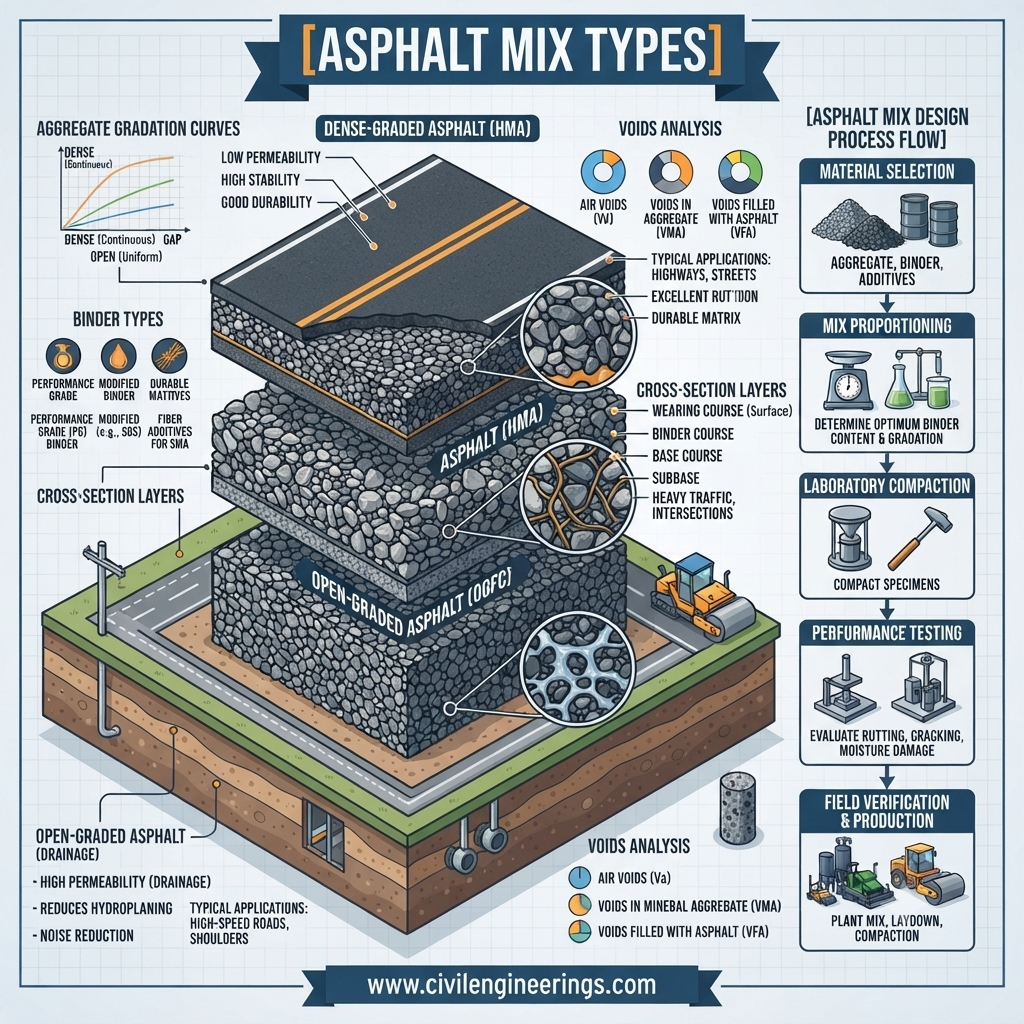
4. Dense-Graded Asphalt
Dense-graded asphalt contains a well-balanced aggregate gradation that minimises air voids.
Engineering Features
- High stability
- Excellent durability
- Low permeability
- Smooth riding surface
Common Uses
- Surface courses
- Binder courses
- Base layers
It remains one of the most common asphalt mixtures in highway engineering.
5. Open-Graded Asphalt
Open-graded asphalt contains fewer fine aggregates, creating interconnected air voids.
Advantages
- Rapid drainage
- Reduced hydroplaning
- Lower tyre noise
- Improved wet-weather safety
Applications
- Motorways
- High-speed roads
- Rain-prone regions
However, periodic cleaning is essential to prevent clogging of the drainage voids.
6. Gap-Graded Asphalt
Gap-graded asphalt intentionally omits intermediate aggregate sizes.
This unique aggregate structure improves stone-on-stone contact and increases rutting resistance.
Uses
- Heavy traffic corridors
- High-stress intersections
- Industrial pavements
7. Stone Matrix Asphalt (SMA)
Stone Matrix Asphalt is a premium asphalt mixture developed to resist rutting caused by heavy traffic.
Composition
- High coarse aggregate content
- Rich bitumen binder
- Cellulose fibres
- Mineral filler
Advantages
- Outstanding rut resistance
- Long pavement life
- High skid resistance
- Excellent fatigue performance
Applications
- Expressways
- Bus lanes
- Truck routes
- Airport taxiways
Although SMA has a higher initial cost, its lower maintenance requirements often reduce whole-life expenditure.
8. Porous Asphalt
Porous asphalt is designed with interconnected voids that allow rainwater to infiltrate through the pavement.
Benefits
- Stormwater management
- Reduced surface runoff
- Improved groundwater recharge
- Less splash and spray
Typical Applications
- Parking areas
- Footpaths
- Low-volume roads
- Sustainable drainage systems
9. Mastic Asphalt
Mastic asphalt contains a high percentage of bitumen and filler with little or no air voids.
Characteristics
- Waterproof
- Highly durable
- Flexible
- Excellent chemical resistance
Uses
- Bridge decks
- Roof waterproofing
- Industrial floors
- Tunnel structures
10. Polymer Modified Asphalt (PMA)
Polymer-modified asphalt contains additives that improve binder performance.
Common polymers include:
- SBS
- EVA
- Crumb rubber
Benefits
- Increased elasticity
- Better crack resistance
- Improved rutting resistance
- Longer pavement life
Applications
- Heavy-duty highways
- Airport runways
- Bridges
- Extreme climate regions
Engineering Factors for Selecting Asphalt Mix Types
Selecting the appropriate asphalt mix requires technical evaluation of several engineering factors.
Traffic Loading
Roads carrying heavy commercial vehicles require stronger mixes such as SMA or Polymer Modified Asphalt.
Climate
Hot climates demand rut-resistant mixtures.
Cold regions require flexible mixes that resist thermal cracking.
Pavement Layer
Different pavement layers require different mixes.
Typical arrangement includes:
- Wearing Course
- Binder Course
- Base Course
Each layer performs a unique structural function.
Drainage Requirements
Open-graded and porous asphalt improve water drainage and reduce hydroplaning.
Construction Budget
Although premium mixes cost more initially, they often reduce maintenance costs throughout the pavement’s design life.
Asphalt Mix Design Methods
Engineers use laboratory mix design procedures to optimise performance.
Common methods include:
- Marshall Mix Design
- Superpave Mix Design
- Hveem Method
These procedures determine:
- Optimum binder content
- Air voids
- Stability
- Flow
- Density
- Voids in Mineral Aggregate (VMA)
- Moisture susceptibility
Proper laboratory testing ensures reliable field performance.
Quality Control During Asphalt Production
Successful asphalt pavements depend on strict quality control.
Important tests include:
- Aggregate gradation
- Bitumen content
- Density testing
- Marshall Stability
- Indirect Tensile Strength
- Rutting evaluation
- Moisture damage testing
- Temperature monitoring
- Core sampling
Consistent testing reduces construction defects and extends pavement life.
Practical Recommendations for
Civil Engineering Students
- Study aggregate gradation thoroughly.
- Understand Marshall and Superpave design methods.
- Learn pavement layer functions.
- Visit asphalt plants whenever possible.
- Interpret laboratory test reports confidently.
Highway Engineers
- Select asphalt mixes according to traffic classification.
- Ensure proper compaction on site.
- Monitor temperature continuously during paving.
- Verify laboratory mix approval before construction.
- Perform regular pavement condition surveys.
Contractors
- Calibrate asphalt plants regularly.
- Maintain correct haul temperatures.
- Prevent segregation during transport.
- Compact within the specified temperature window.
- Follow approved mix designs without unauthorised changes.
Best Practices for Asphalt Pavement Performance
- Use high-quality aggregates.
- Select appropriate binder grades.
- Maintain proper mixing temperatures.
- Achieve target compaction density.
- Control moisture during construction.
- Follow approved quality assurance procedures.
- Conduct preventive maintenance before distress develops.
- Choose mix types according to traffic and climate conditions.
General Reference to IRC, AASHTO and ICE Guidance
Professional pavement design and asphalt selection should always align with recognised engineering guidance and project specifications.
- IRC (Indian Roads Congress) provides recommendations on pavement design, bituminous materials, construction practices, and maintenance suitable for varying traffic and climatic conditions.
- AASHTO (American Association of State Highway and Transportation Officials) publishes widely adopted standards for pavement design, materials testing, asphalt performance grading, and quality assurance.
- ICE (Institution of Civil Engineers) promotes best practices in highway engineering, sustainable infrastructure, asset management, and lifecycle performance through technical guidance and professional publications.
Project engineers should always consult the latest editions of applicable codes, national specifications, and client requirements before finalising asphalt mix selection or construction procedures.
Frequently Asked Questions (FAQs)
1. Which asphalt mix is best for highways?
Hot Mix Asphalt and Stone Matrix Asphalt are commonly preferred for highways because they provide high strength, excellent rut resistance, and long service life.
2. What is the difference between Hot Mix Asphalt and Warm Mix Asphalt?
Hot Mix Asphalt is produced at higher temperatures, while Warm Mix Asphalt is manufactured at lower temperatures using additives or foaming techniques that reduce energy consumption and emissions.
3. Why is Stone Matrix Asphalt used on heavily trafficked roads?
Its stone-on-stone aggregate structure offers exceptional resistance to rutting, making it suitable for roads carrying frequent heavy vehicles.
4. What is porous asphalt used for?
Porous asphalt allows rainwater to pass through the pavement, helping control surface runoff and improving drainage in parking areas and low-volume roads.
5. Which asphalt mix is suitable for temporary road repairs?
Cold Mix Asphalt is widely used because it can be stored and applied without heating.
6. How does polymer-modified asphalt improve pavement performance?
Polymer additives increase elasticity, reduce cracking, enhance rutting resistance, and improve long-term durability.
7. What factors influence asphalt mix selection?
Traffic volume, axle loads, climate, pavement layer, drainage needs, material availability, and project budget all affect mix selection.
8. What is the purpose of Marshall Mix Design?
Marshall Mix Design helps determine the optimum asphalt binder content while evaluating stability, flow, density, and air void characteristics.
9. Why is proper compaction important?
Adequate compaction reduces air voids, increases strength, improves durability, and minimises moisture-related damage.
10. Can one asphalt mix be used for every project?
No. Different pavement applications require different asphalt mix types based on structural, environmental, and operational requirements.
Conclusion
Selecting the appropriate Asphalt Mix Types is one of the most important decisions in highway engineering because it directly influences pavement durability, safety, ride quality, maintenance frequency, and lifecycle cost. From conventional Hot Mix Asphalt to advanced Stone Matrix Asphalt, Warm Mix Asphalt, Porous Asphalt, and Polymer Modified Asphalt, each mixture has unique characteristics designed to meet specific engineering challenges. No single solution is suitable for every project. Instead, successful pavement design requires careful assessment of traffic loading, climate, drainage, construction methods, and long-term performance objectives.
For students, mastering asphalt technology builds a strong foundation in pavement engineering. For practising engineers and contractors, applying recognised design methods, maintaining strict quality control, and following established guidance from organisations such as IRC, AASHTO, and ICE can significantly improve construction quality and pavement longevity. By understanding and correctly applying different Asphalt Mix Types, infrastructure professionals can deliver safer, more sustainable, and cost-effective roads that continue to perform reliably throughout their intended design life.
Meta Description:
